
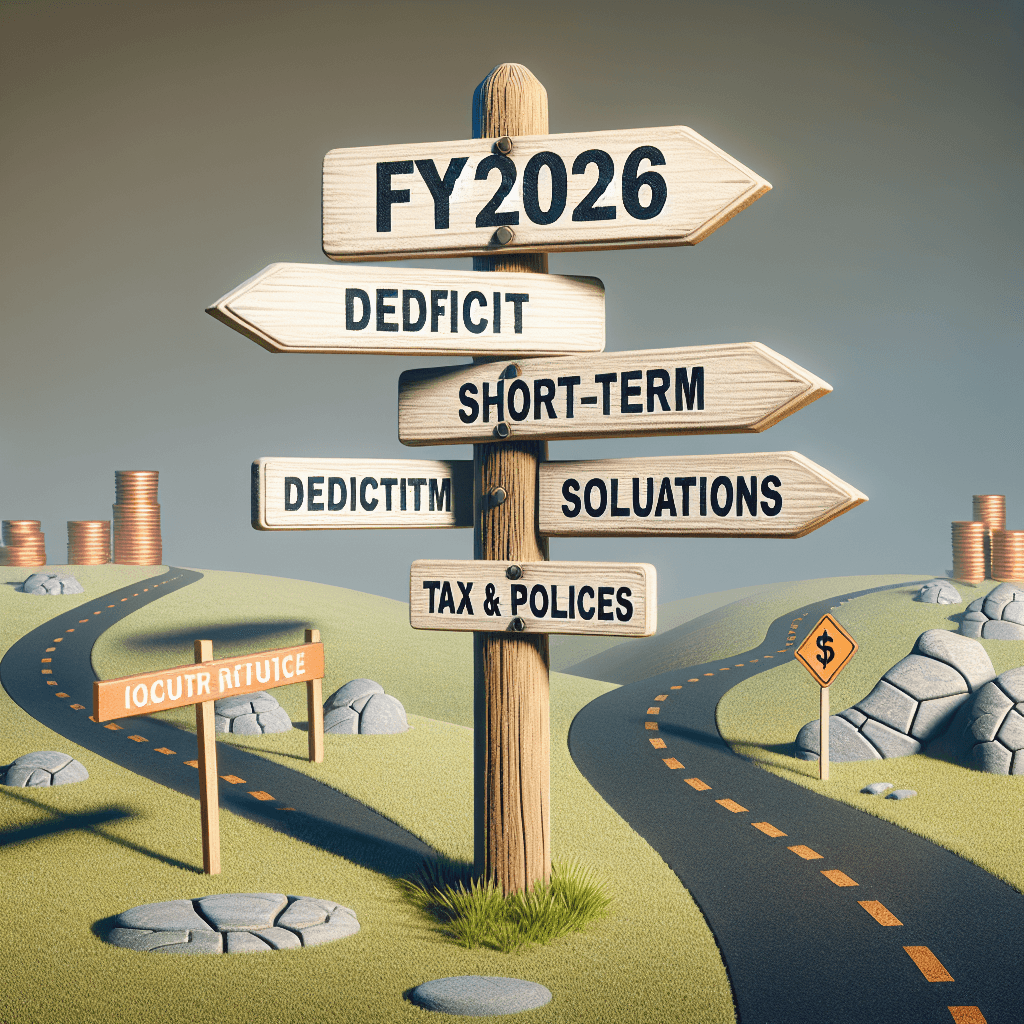
How Illinois Plans to Close the FY2026 Budget Gap: A Mix of Short-Term Patches, Targeted Taxes, and Policy Reforms
Illinois is facing a budget shortfall for fiscal year 2026 that state leaders are trying to address with a combination of short-term patches and possible tax and policy changes rather than a single sweeping solution. Early discussions already include one-time revenue maneuvers, targeted tax options, and structural reforms aimed at reducing recurring liabilities. This article explains the drivers of the FY2026 deficit, what short-term fixes look like, which tax and policy shifts are on the table, the trade-offs involved, and how residents and businesses are likely to be affected.
Table of Contents
Illinois FY2026 Deficit Snapshot: What’s driving the FY2026 budget gap
Illinois’s projected shortfall for FY2026 reflects several structural and cyclical factors rather than a single cause. Major drivers typically include:
- Long-term pension obligations that require growing contributions, which squeeze other parts of the budget.
- Rising health and Medicaid costs tied to demographics, inflation, and service demand.
- Education and social service commitments that are politically difficult to cut deeply.
- Revenue volatility from income taxes (capital gains and high-income filers) and sales taxes tied to economic cycles.
- One-time revenue sources used in prior years that are no longer available.
- Post-pandemic spending adjustments and lingering programmatic commitments.
These pressures create a situation where a combination of recurring and non-recurring solutions is needed. Illinois faces the choice of enacting structural reforms to permanently reduce liabilities or temporarily closing gaps while deferring harder decisions.
Why officials favor incremental fixes over a single comprehensive overhaul
There are practical and political reasons leaders often prefer a mix of short-term patches plus targeted policy adjustments instead of one large, immediate “fix.”
Political and timing constraints
Major tax increases or structural reforms typically require lengthy legislative debate, stakeholder negotiations, and sometimes public referenda. Lawmakers have to balance competing constituencies—public employees, municipalities, schools, health providers, and taxpayers—each resisting deep cuts or tax hikes. Election calendars and political capital also limit appetite for aggressive moves, especially in a divided legislature. Incremental steps are easier to pass, allow for political cover, and buy time for more comprehensive planning.
Credit markets and bond rating pressure
Credit-rating agencies monitor whether a state has a credible plan to close budget gaps. Using short-term measures can be acceptable if accompanied by a clear medium-term strategy; however, repeated reliance on one-time patches risks negative ratings actions. Policymakers often sequence measures to avoid immediate downgrades while they negotiate longer-term structural changes.
Short-term patches policymakers are deploying
Short-term fixes are typically aimed at creating breathing room for the budget year without committing to recurring cuts or taxes. Common patches include:
One-time revenues and fund sweeps
- Sweeping balances from nonessential or underused funds, transfers from special accounts, and liquidating or leasing assets can produce one-time cash. While helpful for FY2026, these moves do not solve structural deficits and may reduce flexibility later.
- Accelerating or recognizing revenue early (for example, reclassifying receipts) can temporarily boost the bottom line.
Borrowing and cash-flow tactics
- Short-term borrowing—tax anticipation notes or other cash-flow instruments—can smooth payment timing but increases interest costs and shifts pressure to future budgets.
- Monetizing receivables or selling bonds backed by specific revenue streams (such as toll receipts) provides immediate cash but commits future revenue.
Spending deferrals and payment timing
- Delaying vendor payments, deferring capital projects, or shifting the timing of certain disbursements are common tactics. These steps can create perception risks and operational disruptions if overused.
- Temporary hiring freezes, limited travel or equipment purchases, and targeted nonessential program pauses reduce near-term expenditures.
Use of federal pandemic-era or other special funds
- If federal pandemic relief or other earmarked funds remain available and legally allowable, states may use them to offset certain expenses. This approach is time-limited and again does not address recurring obligations.
Pros and cons of one-time patches
Pros:
- Quick to implement.
- Avoids immediate tax increases or large program cuts.
- Buys time for negotiation and planning.
Cons:
- Transfers fiscal pressure to future years.
- Can undermine public confidence if repeated.
- May complicate future year budgets by removing reserve capacity or one-time revenue sources.
Tax changes under consideration
Since short-term patches are temporary, many policymakers are considering targeted tax changes to produce recurring revenue or restructure the tax code. Options under consideration often include:
Income and sales tax options
- Adjusting personal income tax rates or brackets can increase recurring revenue, but such changes are politically sensitive and may be economically distortionary if not structured progressively.
- Expanding the sales tax base to include more services—especially digital and subscription services—can broaden the tax base. Careful design is needed to avoid regressive impacts on low-income households.
- Restoring or temporarily raising sales tax rates in specific categories (e.g., luxury goods) offers a targeted approach.
Targeted excise and business tax adjustments
- Increasing excise taxes (tobacco, alcohol, cannabis, fuel) or redirecting portions of those receipts can raise revenue with less broad political impact.
- Small increases in corporate taxes or removing special business tax breaks can generate revenue while signaling fairness, but could affect business climate perceptions.
- Examining property tax relief funding mechanisms and municipal revenue sharing may be necessary if local governments rely on state transfers.
Improving tax enforcement and closing loopholes
- Strengthening tax enforcement, reducing refund fraud, and closing loopholes often yield revenue with minimal economic distortion. This can include better auditing of large filers, modernizing collections, and revising tax expenditures that lack clear policy justification.
- Periodic tax amnesty programs or one-off audits of delinquent accounts can provide one-time revenue without broad rate increases.
Equity, economic impacts, and sequencing
Design choices matter. Progressive income adjustments protect lower-income households better than broad sales tax increases, which can be regressive. Targeted business tax changes should consider competitiveness and employment effects. Sequencing—using some short-term patches first while preparing permanent, equitable reforms—is often politically feasible and fiscally prudent.
Policy reforms beyond taxation
Addressing recurring liabilities requires policy adjustments in major spending areas. Key reforms under discussion often include:
Pension-related options and limits
- Illinois’s large pension obligations are a core fiscal pressure. Options include changing contribution schedules, altering benefit accrual terms for new hires, adjusting cost-of-living adjustments (COLAs), or pursuing refinancing strategies. Constitutional protections on existing benefits and legal constraints limit dramatic changes for current retirees and vested workers.
- Public sector labor negotiations and collective bargaining complicate rapid reform. Many approaches focus on long-term structural changes for future employees while finding ways to stabilize current obligations through funding discipline.
Health care, Medicaid, and entitlement cost control
- Medicaid is a significant and growing part of many state budgets. Reforms may include tighter managed-care oversight, value-based payment models, enrollment verification processes, and targeted eligibility adjustments.
- Investing in preventive care and social determinants can reduce long-term costs, but savings often materialize slowly.
Operational efficiencies and program redesigns
- Consolidating programs or agencies, investing in IT for better program administration, renegotiating contracts, and enhancing procurement efficiency produce savings over time.
- Performance-based budgeting and sunset reviews of tax expenditures and programs can rationalize spending.
Capital spending prioritization
- Delaying or reprioritizing capital projects (transportation, state facilities, schools) can conserve cash in the short term but may defer needed maintenance and increase costs over time.
Pension fixes: options and constraints
Pension reform is a politically charged and legally constrained area. Approaches often discussed include:
- Increasing the state’s annual contributions to accelerate amortization of unfunded liabilities (recurring but politically challenging).
- Issuing pension obligation bonds to reduce near-term contribution pressure (adds interest costs and refinancing risk).
- Adjusting benefits for future hires through hybrid plans, defined-contribution elements, or modified COLAs (applies going forward and is more defensible legally).
- Negotiating shared responsibility with local governments or school districts for certain pension costs.
Any pension path must respect constitutional protections and contract law while balancing intergenerational fairness and fiscal sustainability.
Medicaid and healthcare spending reforms
Because health care costs are driven by both price and utilization trends, reforms typically combine payment-model changes (moving to value-based care), program integrity measures, and provider rate negotiations. Short-term savings can be achieved via rate adjustments, prior authorization controls, and tighter eligibility verification, though political and legal obstacles exist.
The trade-offs: short-term stability vs. long-term sustainability
Using patches and selective tax or policy changes can stabilize the FY2026 budget, but trade-offs matter:
- Repeated reliance on one-time solutions can create “fiscal cliff” years when the underlying structural gap reappears larger than before.
- Broad tax increases may provide stable revenue but risk dampening growth and competitiveness if not well targeted.
- Deep spending cuts disproportionately affecting services can erode public infrastructure, education outcomes, and long-term economic potential.
- Structural reforms—especially to pensions and health care—often require careful design, phased implementation, and stakeholder buy-in to avoid unintended consequences.
Prudent practice is to pair short-term measures with a credible medium-term plan that phases in structural changes, protecting vulnerable populations and investing in economic growth areas.
What Illinois residents and businesses should expect
Residents:
- Possible modest tax increases or adjustments to certain service taxes, depending on legislative choices.
- Short-term disruptions in program timing, payment delays for certain state contractors, or temporary reductions in discretionary services.
- Ongoing debates about education, public safety, and social services funding levels.
Businesses:
- Potential changes in business taxes, fee structures, or targeted credits could affect operating costs.
- Some opportunities could arise from state efforts to simplify compliance or broaden digital sales taxation.
- Stability in infrastructure and workforce programs will be an advocacy focus for many sectors.
Likely scenarios for FY2026 and the decision timeline
Several plausible scenarios could play out:
Best-case (credible mix): Policymakers combine modest recurring revenue increases, targeted spending reforms, and one-time patches, producing a balanced FY2026 budget while adopting a multi-year stabilization plan. Credit agencies view the package as credible, limiting rating damage.
Middle (patch-heavy): A package dominated by one-time measures and limited targeted taxes closes FY2026 but leaves a sizable recurring gap for future years. Fiscal stress is deferred and may require larger adjustments for FY2027–FY2028.
Worst-case (insufficient action): Political deadlock or insufficient measures force deeper cuts to essential services or trigger emergency borrowing at higher cost, damaging economic confidence and prompting rating downgrades.
Decision timeline typically follows:
- Early budget projections and executive proposals (fall/winter)
- Committee hearings and amendments (winter/early spring)
- Final legislative action tied to spring/summer budget deadlines or temporary continuing resolutions
- Implementation through the fiscal year with monitoring and midyear adjustments as needed
How stakeholders can engage in the budget process
- Track public hearings and testify before legislative budget committees.
- Contact state legislators and the governor’s office with specific, evidence-based recommendations.
- Coordinate with advocacy groups, municipal leaders, school districts, and business associations to present unified analysis.
- Monitor independent fiscal watchdogs and nonpartisan analyses to hold policymakers accountable for long-term implications.
- Use media and social platforms to highlight local impacts and suggest alternatives.
Recommendations for policymakers
- Prioritize transparency: clearly distinguish one-time from recurring measures and publish multi-year budget projections.
- Pair short-term patches with a credible multi-year plan that phases in structural reforms.
- Protect vulnerable populations from regressive tax changes by targeting revenue increases toward those most able to pay or by providing offsets for low-income households.
- Focus on reform areas that produce recurring savings without undermining essential services—improved tax collections, program efficiencies, and phased pension reforms for new hires.
- Use independent, nonpartisan analyses to guide policy choices and build public trust.
Conclusion
Illinois’s approach to the FY2026 budget gap is likely to blend immediate, pragmatic steps with careful consideration of tax and policy changes that can shore up recurring revenue and reduce long-term liabilities. While short-term patches can buy time and avoid abrupt service disruptions, they must be paired with thoughtful structural reforms—especially in pensions and healthcare—if the state hopes to stabilize its finances sustainably. For residents and businesses, the coming months will require close attention to legislative proposals and opportunities to participate in the process. The challenge is to craft a course that balances fiscal responsibility, economic competitiveness, and equity.
FAQ
Q: Will Illinois raise income taxes to close the FY2026 shortfall?
A: Lawmakers may consider income tax adjustments among several options, but outcomes depend on political negotiations and whether policymakers prioritize progressive, sustainable revenue versus targeted changes.
Q: Are one-time patches risky?
A: One-time measures can be useful for immediate stabilization but are risky if used repeatedly because they defer recurring problems to future budgets and may worsen fiscal stress later.
Q: What role do pensions play in the deficit?
A: Pension obligations often represent a significant recurring budget pressure. Addressing them typically requires a mix of increased contributions, benefit design changes for future employees, and careful legal navigation.
Q: How can residents influence budget decisions?
A: Residents can testify at hearings, contact elected officials, participate in advocacy coalitions, and use data-driven arguments to highlight impacts on communities.
Q: Will credit ratings be affected?
A: Credit ratings depend on the perceived credibility and durability of the fiscal plan. A balanced mix of immediate actions and a plausible multi-year strategy can mitigate rating risks; repeated short-term fixes without structural change increase downgrade risk.