Capital of Illinois: Everything You Need to Know
When it comes to U.S. states, each has a designated capital city that serves as the political and administrative hub. If you’ve ever asked yourself, “What’s the capital of Illinois?”, this article will provide you with a comprehensive overview, covering the city’s history, significance, and key facts. Whether you are a student, traveler, or just curious, understanding the capital of Illinois is essential to grasping the state’s identity.
What is the Capital of Illinois?
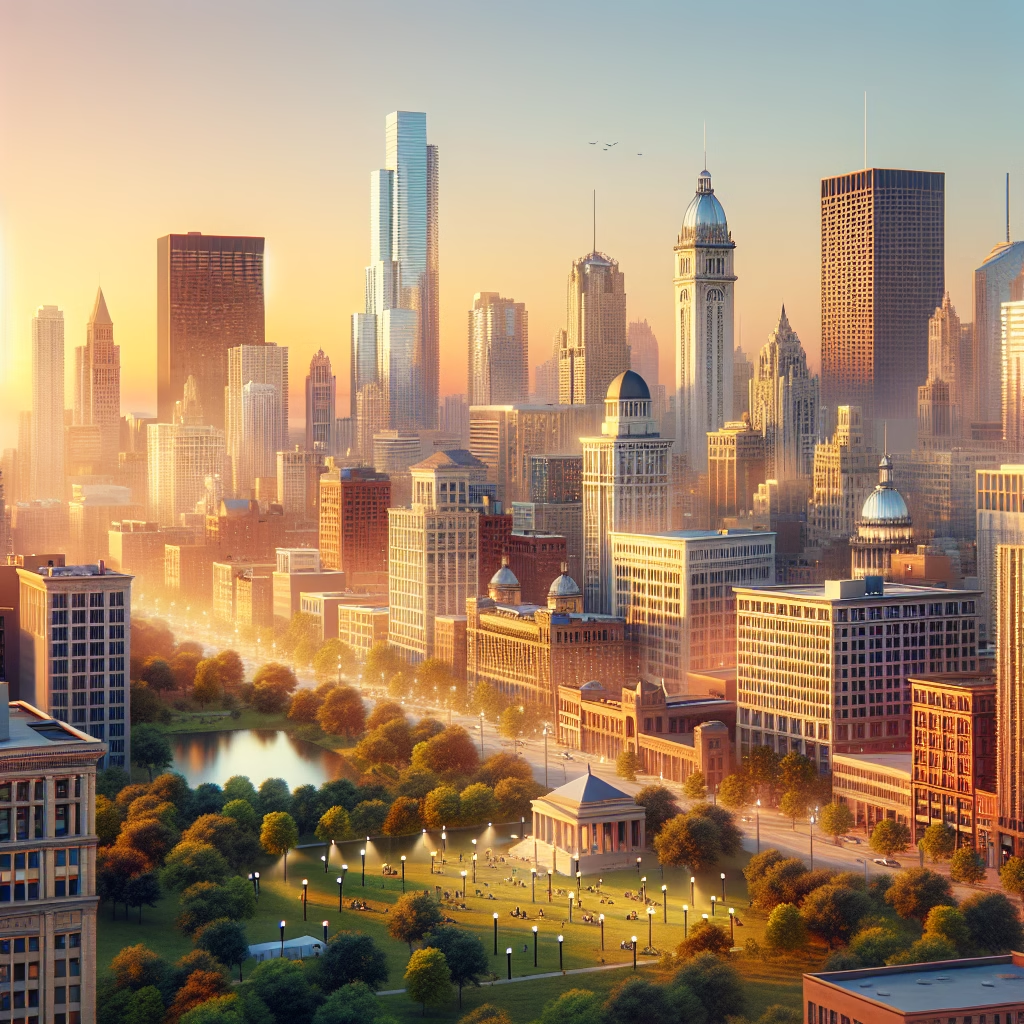
The capital of Illinois is Springfield. This city has been the official seat of government since 1839, playing a central role in the state’s political, cultural, and economic life.
Quick Facts About Springfield
- Founded: 1821
- Location: Central Illinois, Sangamon County
- Population: Approximately 115,000 (as of 2020)
- Famous for: Being the home of Abraham Lincoln before his presidency
Why Springfield is the Capital of Illinois
Springfield became the capital due to its strategic location and historical importance. Here’s why:
- Originally, the capital was in Kaskaskia, located on the Mississippi River.
- The state government moved the capital to Vandalia in 1820.
- As the population shifted and expanded inland, Springfield was selected as a central and accessible location.
- It officially became the capital in 1839.
This move helped centralize government operations and made the city a focal point for Illinois politics.
Historical Significance of Springfield
Abraham Lincoln and Springfield
One of Springfield’s most famous claims to fame is its connection to Abraham Lincoln, the 16th President of the United States. Lincoln lived in Springfield from 1837 until 1861.
- His law office, home, and tomb are located here.
- The city is often considered his political birthplace, where he launched his law career and political journey.
- Visitors can explore multiple historical sites related to Lincoln, making Springfield a pilgrimage spot for history enthusiasts.
The Illinois State Capitol Building
The Illinois State Capitol in Springfield is a prominent and architecturally significant building.
- Completed in 1888, it houses the Illinois General Assembly (the Senate and House of Representatives) and the offices of the Governor and other state officials.
- The building is taller than the U.S. Capitol in Washington, D.C., reflecting the state’s pride in its government.
What Makes Springfield Important Today?
Political Hub of Illinois
As the capital, Springfield hosts the core of Illinois state government:
- Governors and legislators conduct sessions here.
- State departments and government agencies are headquartered here.
- Political decisions affecting nearly 13 million Illinois residents are made in Springfield.
Cultural Attractions
Springfield offers a rich cultural experience tied to its history:
- Abraham Lincoln Presidential Library and Museum: One of the most comprehensive collections dedicated to Lincoln’s life and legacy.
- Old State Capitol: A historic building where Lincoln served as a legislator and gave his famous “House Divided” speech.
- Various festivals and events celebrating Illinois history are centered in Springfield every year.
Economic Role
While primarily a government town, Springfield also has other economic drivers:
- Healthcare
- Education
- Retail and tourism sectors focused on its historical sites
Other Capitals You Might Confuse with Springfield
When people hear “capital of Illinois,” it’s important not to confuse Springfield with other major cities in the state, such as:
- Chicago: The largest city in Illinois and a major economic and cultural hub but not the capital.
- Peoria: A significant city located west of Springfield, with its own rich industry and culture.
- Champaign-Urbana: Known for the University of Illinois, but not the state’s capital.
Knowing “what’s the capital of Illinois” prevents common misconceptions especially since Chicago’s global fame often overshadows Springfield’s governmental importance.
Visiting Springfield: Tips and Highlights
If you’re planning a visit, here are some tips to make the most of your trip:
Top Attractions
- Lincoln’s Home National Historic Site
- Illinois State Capitol Tours
- Lincoln Tomb and Cemetery
- Dana-Thomas House (designed by Frank Lloyd Wright)
- Knight’s Action Park & Caribbean Water Adventure (for a family-friendly option)
Best Time to Visit
Spring and fall offer pleasant weather and various cultural events. Visiting during the Lincoln Bicentennial or related celebrations adds to the historical experience.
Getting There
Springfield is accessible via:
- Interstate 55, connecting to Chicago and St. Louis
- Abraham Lincoln Capital Airport, with flights to Chicago and Dallas/Fort Worth
Summary: What’s the Capital of Illinois?
To recap, Springfield is the capital of Illinois. It holds a central place in the state’s political history and modern governance. Known best for its deep connection to Abraham Lincoln, Springfield combines historical significance with vibrant civic life.
By understanding the capital’s role, history, and attractions, you gain a better appreciation of Illinois’ identity beyond just the famous Chicago skyline.
Whether for education, travel planning, or general curiosity, knowing the capital of Illinois enriches your knowledge of this diverse and dynamic state.