- Introduction
- Defining Political Corruption and Crimes
- Historical Overview of Corruption in Illinois
- Notorious Cases of Crimes Committed by Illinois Officials
- 1. Rod Blagojevich and the Attempted Sale of Barack Obama’s Senate Seat
- Background:
- The Crime:
- Outcome:
- Impact:
- 2. Operation Safe Road – Commuter Toll Fraud Scandal
- Background:
- The Crime:
- Outcome:
- Impact:
- 3. William Cellini and Lincoln Chafee Corruption Scandal
- Background:
- The Crime:
- Outcome:
- Impact:
- 4. Otto Kerner Jr. – Sentenced for Bribery While Governor
- Background:
- The Crime:
- Outcome:
- Impact:
- 5. Patrick Botterman – County Treasurer Fraud
- Background:
- The Crime:
- Outcome:
- Impact:
- 6. Operation Greylord – Corrupt Judicial Officials in Cook County
- Background:
- The Crime:
- Outcome:
- Impact:
- 7. Todd Stroger – The Patronage and Mismanagement Controversy
- Background:
- The Crime:
- Outcome:
- Impact:
- Why Is Illinois So Prone to Political Corruption?
- Consequences and Reforms
- What Are the Costs?
- Reforms Implemented
- Continuous Challenges
- Lessons from Illinois’s Corruption Scandals
- Conclusion
- References and Further Reading
Worst Crimes Committed by Illinois Officials
Illinois has a long history tinged with corruption and crime involving public officials. From bribery and fraud to embezzlement and abuse of power, some of the worst crimes committed by Illinois officials have significantly impacted public trust and governance. This article explores some of the most notorious cases, shedding light on corruption, scandals, and the consequences faced by those involved.
Introduction
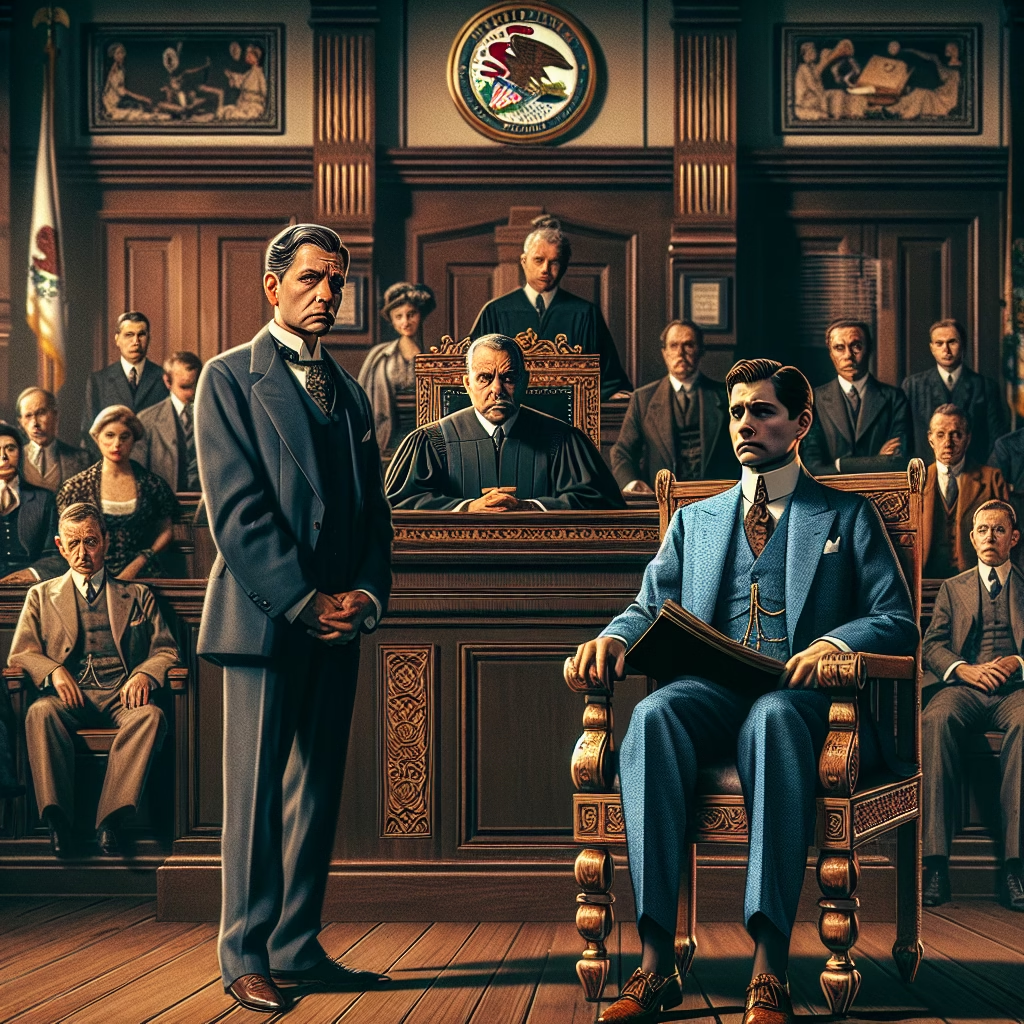
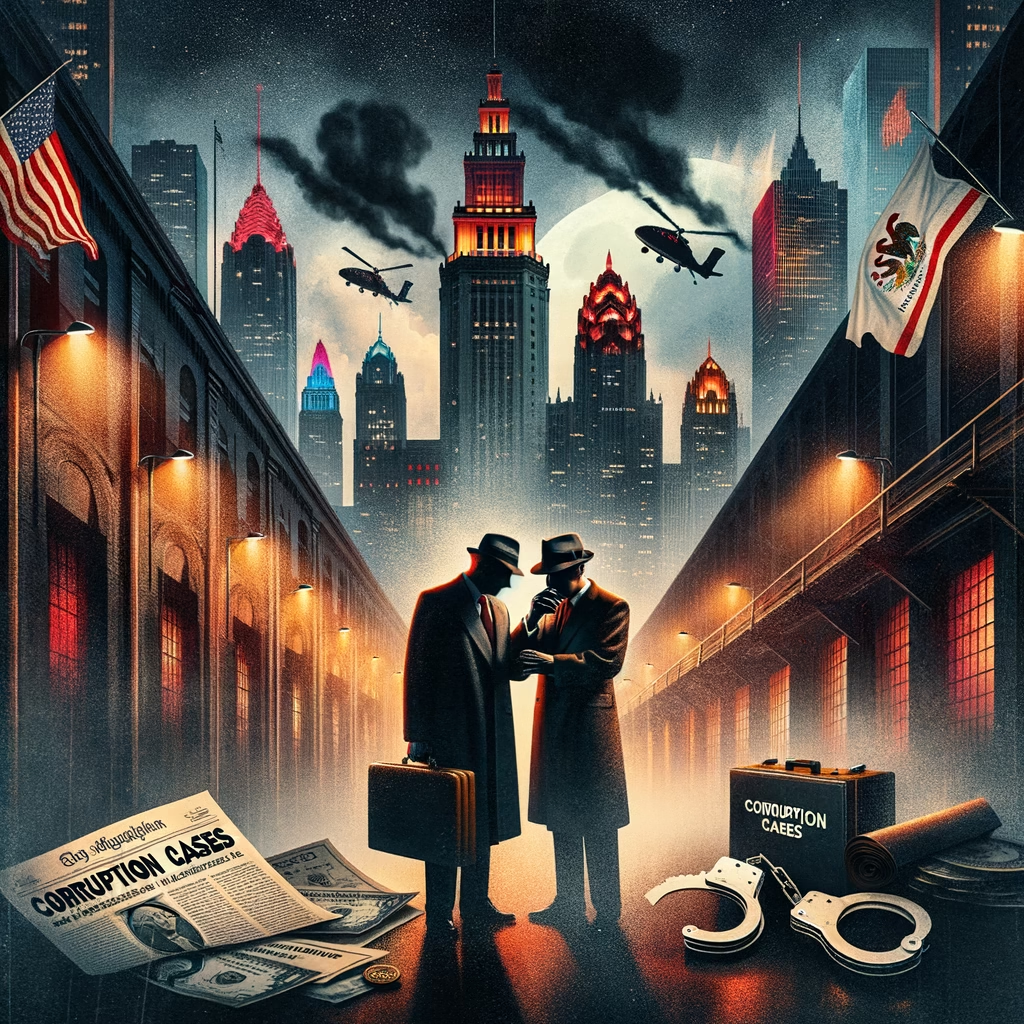
Political corruption is a pervasive menace that undermines democratic institutions and erodes citizen confidence. Illinois, often ranked among the most corrupt states in the U.S., has seen numerous cases where elected and appointed officials abused their power for personal gain. This article presents a detailed analysis of some of the worst crimes committed by Illinois officials, emphasizing the nature of these crimes, the people responsible, and their effects on both the state and its citizens.
Defining Political Corruption and Crimes
Before diving into specific cases, it’s essential to understand what constitutes political corruption and crime in a public office context:
- Bribery: Illegal offering, giving, receiving, or soliciting of something valuable to influence an official’s actions.
- Embezzlement: Theft or misappropriation of funds placed in one’s trust or belonging to the government.
- Fraud: Deceit deliberately practiced to secure unfair or unlawful gain.
- Abuse of Power: Misusing official position to benefit oneself or others unlawfully.
- Extortion: Illegal use of one’s office to obtain money or favors, often through coercion.
Illinois’s political landscape, fraught with such crimes, offers numerous cases demonstrating these unlawful acts.
Historical Overview of Corruption in Illinois
Illinois’s reputation regarding official corruption dates back decades. The state has earned nicknames like “Land of Lincoln, Land of Corruption” because of repeated incidents where public trust has been abused. Root causes often include weak oversight, political patronage, and lack of transparency.
Notorious Cases of Crimes Committed by Illinois Officials
1. Rod Blagojevich and the Attempted Sale of Barack Obama’s Senate Seat
Background:
Rod Blagojevich served as the 40th Governor of Illinois from 2003 until his impeachment in 2009. His political career unraveled dramatically due to several criminal charges.
The Crime:
In December 2008, the FBI recorded conversations in which Blagojevich attempted to “sell” the U.S. Senate seat vacated by then-President-elect Barack Obama. He sought personal benefits, including campaign contributions and a job for someone close to him, in return for appointing a replacement senator.
Outcome:
- Charged with conspiracy to commit mail and wire fraud and solicitation of bribery.
- Convicted in 2011 and sentenced to 14 years in federal prison.
- Released on compassionate grounds in 2020 after serving nearly eight years.
Impact:
This case exposed the depths of political corruption in the state and received national attention, highlighting the need for stricter ethical controls.
2. Operation Safe Road – Commuter Toll Fraud Scandal
Background:
The Illinois State Toll Highway Authority oversees the state’s toll operations. Between the late 1990s and early 2000s, corruption undermined the integrity of toll management.
The Crime:
Multiple officials and contractors were implicated in schemes involving inflated contracts, kickbacks, and funneling public money for personal gain. One scheme involved the sale of Commercial Driver’s Licenses (CDL) that were supposed to be free but were sold illegally.
Outcome:
- Several state officials and private contractors were convicted of fraud and racketeering.
- The scandal led to more rigorous oversight and reforms within the Illinois Tollway administration.
Impact:
The scandal drained taxpayer funds and hampered trust in a critical public infrastructure agency.
3. William Cellini and Lincoln Chafee Corruption Scandal
Background:
William Cellini was an influential political figure and fundraiser in Illinois who used his connections to sway the prison management contracting process.
The Crime:
Cellini and others were accused of attempting to rig contracts for private prison companies. The Justice Department alleged they plotted to secure contracts for prison services in exchange for bribes.
Outcome:
- Cellini was charged with bribery and fraud but eventually acquitted in 2013. However, the scandal itself dented the credibility of state contracting processes.
Impact:
The scandal raised concerns about privatization and its vulnerability to corruption in Illinois.
4. Otto Kerner Jr. – Sentenced for Bribery While Governor
Background:
Otto Kerner Jr., Governor of Illinois from 1961 to 1968, was considered a progressive leader during his tenure.
The Crime:
In 1973, Kerner was convicted of accepting bribes from a racetrack owner while he was governor. Guarantees of favorable legislation or licensing deals were involved.
Outcome:
- Sentenced to three years in federal prison.
- His conviction marked one of the earliest instances of gubernatorial corruption conviction in Illinois history.
Impact:
Kerner’s downfall demonstrated that even governors were not above the law and paved the way for subsequent anti-corruption measures.
5. Patrick Botterman – County Treasurer Fraud
Background:
Patrick Botterman, Cook County Treasurer from 2002 until his death in 2008, faced accusations posthumously related to financial mismanagement.
The Crime:
Auditors found irregularities suggesting potential misappropriation and poor handling of county funds during Botterman’s tenure.
Outcome:
- Although Botterman passed away before charges, the scandal forced a revamp of internal financial controls.
- Highlighted the systemic risks in county governance.
Impact:
This case raised awareness of the importance of financial transparency at all levels of Illinois government.
6. Operation Greylord – Corrupt Judicial Officials in Cook County
Background:
Operation Greylord was a federal investigation during the 1980s uncovering rampant corruption in the Cook County judicial system.
The Crime:
The probe revealed that judges, lawyers, and court officials were accepting bribes to fix criminal and civil cases. Such corruption distorted justice and undermined court operations.
Outcome:
- Over 90 individuals, including judges and prosecutors, were indicted and many convicted.
- It led to judicial reforms and the establishment of ethics boards.
Impact:
Operation Greylord became a landmark case in battling systemic judicial corruption in Illinois.
7. Todd Stroger – The Patronage and Mismanagement Controversy
Background:
Todd Stroger served as Cook County Board President from 2006 to 2010, inheriting a legacy rife with political patronage.
The Crime:
Although Stroger was not formally charged with criminal activity, his term was marred by accusations of nepotism, unnecessary spending, and political patronage. His administration was blamed for hundreds of patronage jobs and misuse of taxpayer money.
Outcome:
- Widespread public condemnation leading to political defeat.
- Stimulated reforms aimed at curbing patronage in Cook County politics.
Impact:
While not a criminal case per se, Stroger’s administration epitomized non-violent corruption and unchecked political favoritism.
Why Is Illinois So Prone to Political Corruption?
Several factors contribute to the persistent corruption in the state:
- Historical Political Patronage Tradition: Roots of the “machine politics” that reward loyalty over merit.
- Weak Oversight and Enforcement: Political connections often hamper investigations.
- Large Bureaucracy: More positions mean more opportunities for graft.
- Economic Incentives: Illinois’s large budget and various regulated industries make it susceptible to financial crimes.
- Cultural Tolerance: A degree of public resignation or acceptance of corruption historically.
Consequences and Reforms
What Are the Costs?
- Loss of public trust leading to voter apathy.
- Financial drain, with millions lost due to embezzlement and fraud.
- Inequality, as corruption often hurts marginalized communities.
- Stunted economic growth due to lack of transparency.
- Detrimental impact on policies as decisions do not always reflect public interests.
Reforms Implemented
- Creation of Ethics Commissions with subpoena and investigative powers.
- Introduction of transparency laws and stronger disclosure requirements.
- Implementation of whistleblower protections.
- Appointment of independent bodies for oversight of contracts and public expenditures.
- Federal and state corruption task forces such as Operation Greylord.
Continuous Challenges
Despite reforms, challenges such as political interference, loopholes, and slow judicial proceedings persist.
Lessons from Illinois’s Corruption Scandals
- Transparency is key: Keeping government actions open to scrutiny reduces corrupt behavior.
- Strong enforcement: Laws must be backed by consistent enforcement.
- Public vigilance: Citizens, media, and watchdog groups play crucial roles.
- Ethics in politics: Promoting ethical standards is necessary for long-term change.
- Comprehensive reform: Multi-layered, persistent reforms are essential.
Conclusion
The history of the worst crimes committed by Illinois officials reveals a systemic challenge that has spanned decades. From bribery and fraud to abuse of power, the state offers stark examples of how political corruption can undermine democracy and governance. However, these scandals have also served as catalysts for important reforms aimed at restoring integrity to Illinois politics.
While progress has been made, the road ahead requires steadfast vigilance, rigorous enforcement, and cultural change. For Illinois and other states grappling with similar issues, the lessons learned from these infamous crimes underscore the ongoing fight against political corruption as critical to building a just and accountable government.
References and Further Reading
- Federal Bureau of Investigation – Operation Greylord Overview
- Chicago Tribune – Illinois Political Scandals
- United States Department of Justice – Rod Blagojevich Case
- Illinois Government Ethics Act
This article provides an in-depth exploration of corruption and crimes within Illinois political offices, highlighting significant cases and efforts toward transparency and reform.